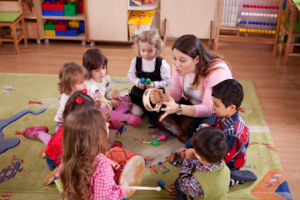
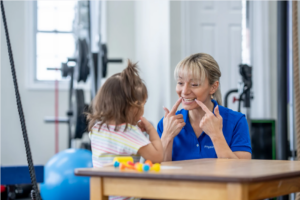
For many children with autism, social situations can feel unpredictable. Joining a game, starting a conversation, asking another child to share, handling disagreement, or understanding what to do when a conversation changes may require skills that other children appear to pick up more naturally.
Social skills programs help children with autism build confidence by teaching these situations in smaller, manageable steps and providing repeated opportunities to practise them in supportive environments. The goal is not to change a child’s personality or make them appear less autistic. Effective programs help children communicate their needs, participate in relationships on their own terms, advocate for themselves, solve social problems, and become more comfortable navigating everyday interactions.
At Nexus ABA Therapy, our Social Skills Program focuses on practical skills that children can use at home, at school, during play, and in the community.
What Are Social Skills Programs for Children with Autism?
Social skills programs are structured interventions that help children learn and practise specific communication, play, relationship, and self-advocacy skills.
Rather than simply telling a child to “be more social,” a well-designed program identifies the exact skill that would make everyday interactions easier and then teaches that skill through methods such as:
- Modelling
- Role-playing
- Guided practice
- Visual supports
- Natural Environment Teaching
- Positive reinforcement
- Peer interaction
- Social problem-solving
- Parent and caregiver coaching
- Practice across different people and settings
Social skills support should always be individualized. One child may need help entering a group activity, while another may communicate comfortably with peers but need support handling teasing, disagreements, unexpected changes, or personal boundaries.
The Ontario Autism Program’s entry-to-school program, for example, identifies communication, play, and social interaction among important school-readiness skill areas.
How Do Social Skills Programs Help Children with Autism Build Confidence?
Confidence often grows when a situation becomes more understandable and manageable.
Imagine being placed in a game without knowing the rules. Even if you wanted to participate, uncertainty could make you hesitant to join. Once someone explains the rules, demonstrates what to do, and gives you a chance to practise without pressure, participating becomes easier.
Social learning can work in a similar way.
A child who has successfully practised how to ask, “Can I play too?” may be more willing to approach a group at recess. A child who knows how to request a break may feel safer participating in a busy activity. A child who has practised what to do when someone says “no” may recover from disappointment more confidently.
Over time, successful experiences can support confidence in several ways:
- Greater willingness to communicate
- More independent participation
- Better ability to ask for help
- Improved social problem-solving
- Increased comfort around peers
- Stronger self-advocacy
- More successful play experiences
- Reduced uncertainty in familiar social situations
This type of confidence building for children with autism is most meaningful when it comes from competence, autonomy, positive experiences, and being understood—not from pressure to imitate neurotypical behaviour.
Which Social Skills Can Children Learn?
The right goals depend on the child’s age, developmental level, communication style, preferences, current abilities, and everyday needs.
Common areas include:
| Social Skill Area | What a Child May Practise | How It Can Support Confidence |
| Starting interactions | Greeting someone, asking to join an activity | Makes approaching others more predictable |
| Play skills | Sharing materials, cooperative play, taking turns | Supports successful peer experiences |
| Conversation | Starting, maintaining, and ending conversations | Makes communication easier to navigate |
| Self-advocacy | Asking for help, saying no, requesting a break | Gives the child more control over situations |
| Emotional regulation | Recognizing feelings and using coping strategies | Helps manage difficult social moments |
| Problem-solving | Responding to disagreement or misunderstandings | Builds independence |
| Perspective taking | Considering what another person may know or want | Supports reciprocal interaction |
| Personal boundaries | Recognizing space, consent, privacy, and safety | Helps children protect and express their needs |
| Flexibility | Managing small changes during games or activities | Supports participation in less predictable situations |
| Friendship skills | Inviting someone to play, maintaining shared interests | Creates more opportunities for meaningful relationships |
Social skills development can also overlap with communication, emotional regulation, independence, and life skills training.
How Does ABA Support Social Skills Development?
Applied Behaviour Analysis, or ABA, can be used to understand which specific skills a child needs and develop measurable strategies for teaching them.
The College of Psychologists and Behaviour Analysts of Ontario describes ABA as applying the science of learning to understand and improve behaviour that is meaningful to the person and those around them.
Within social skills programming, ABA strategies may include breaking a complex skill into smaller steps, demonstrating the skill, prompting when necessary, reinforcing meaningful attempts, measuring progress, and gradually reducing support as independence develops.
For example, “making friends” is too broad to teach directly.
A therapist may instead work on measurable skills such as:
- Approaching a familiar peer.
- Using an appropriate communication method to initiate interaction.
- Asking to join an activity.
- Waiting for the other person’s response.
- Responding appropriately whether the answer is yes or no.
- Participating for several minutes.
- Using a strategy if the activity becomes frustrating.
- Ending or leaving the interaction appropriately when needed.
Nexus provides individualized ABA therapy designed around each child’s strengths, priorities, communication abilities, and everyday environments.
Structured Social Skills Programs vs. Simply Providing More Social Exposure
Giving children opportunities to be around peers can be valuable, but exposure alone does not always teach the skills needed to participate comfortably.
| Unstructured Social Exposure | Structured Social Skills Program |
| Child is placed in a social environment | Specific goals are selected first |
| Social expectations may be unclear | Expectations are explained or demonstrated |
| Limited coaching may be available | Therapist provides individualized support |
| Mistakes may become frustrating | Skills are practised in a supportive setting |
| Progress can be difficult to measure | Behaviour and skill development can be tracked |
| Practice may occur in only one setting | Generalization across settings can be intentionally planned |
| Child may avoid difficult situations | Challenges can be introduced gradually |
The strongest approach is often not choosing one or the other. Instead, children learn skills with appropriate support and then practise those skills naturally with family members, classmates, siblings, and community members.
The American Academy of Pediatrics notes that social-skills interventions can involve adult-mediated, peer-mediated, or mixed approaches and highlights the importance of practising skills in natural social environments.
What Does Confidence Building Actually Look Like in Everyday Life?
Progress does not always look dramatic.
Confidence can appear through small but meaningful changes.
A child who previously waited for an adult to speak for them may begin asking a cashier a question independently.
A child who avoided group activities may stay for five minutes, participate, and appropriately request a break.
A child who became upset when a game changed may learn to ask what the new rule is.
A child may tell another person, “I don’t like that,” instead of remaining silent.
A child who usually plays alone may invite one familiar classmate to participate in a preferred activity.
These are meaningful outcomes because the child is gaining practical tools for navigating their environment.
What Are Some Practical Examples of Social Skills Training?
Example 1: Joining a Game at Recess
Suppose a child wants to play soccer but does not know how to join a game already in progress.
A therapist might:
- Model how to approach the group.
- Practise a short phrase such as “Can I play?”
- Role-play several possible responses.
- Teach what to do if the answer is yes.
- Teach what to do if the group says no.
- Practise with familiar peers.
- Eventually practise the skill at school or in the community.
Confidence develops because the child knows what options are available rather than entering the situation without a plan.
Example 2: Asking for Help
A child may become frustrated when they cannot open a container or understand an assignment.
Instead of immediately completing the task for the child, adults can teach a communication strategy for requesting help.
Once the child experiences that asking for help works, they may become increasingly willing to communicate before frustration escalates.
Example 3: Handling a Change in Play
Two children are building with blocks. One child suddenly changes the plan.
The learner may practise responses such as:
- Asking what changed.
- Suggesting another idea.
- Agreeing to try the new version.
- Requesting to continue separately.
- Taking a break if needed.
The goal is not to force flexibility in every situation. It is to give the child several functional options.
Why Is Practising Social Skills in Real-Life Settings Important?
A child demonstrating a skill during therapy does not automatically mean the skill will appear at school, at a birthday party, or with an unfamiliar peer.
In behaviour analysis, transferring a learned skill to different people, environments, activities, or situations is called generalization.
The NICE guidance on autism support for children and young people recommends social-communication interventions that are adjusted to the child’s developmental level and involve parents, caregivers, teachers, or peers when appropriate.
Real-world practice may therefore include:
- Home routines
- School
- Playground activities
- Daycare
- Community programs
- Parks
- Family gatherings
- Shopping
- Sports or recreation
- Playdates
Home- and community-based learning can be especially useful because the child practises the skill in the environment where it is actually needed.
Do Social Skills Programs Really Work for Children with Autism?
Research indicates that structured social-skills interventions can help, but parents should be cautious of programs promising guaranteed or dramatic results.
A systematic review and meta-analysis of group social-skills interventions found an overall medium effect among autistic youth, although results varied depending on who measured improvement. Parent and observer ratings generally showed smaller effects, and teacher ratings did not show significant effects in that analysis.
A separate randomized controlled trial involving 122 children found small but statistically significant improvements following group social-skills training.
The practical takeaway is important: social skills programs can be valuable, but results vary between children. Progress depends on factors such as:
- Whether goals match the child’s actual needs
- Developmental and communication level
- Motivation and interests
- Program quality
- Opportunities for practice
- Family and school collaboration
- How progress is measured
- Whether skills transfer beyond therapy
No ethical provider should guarantee a particular outcome.
What Makes an Autism Social Skills Program Effective?
1. Individualized Goals
Programs should begin with assessment rather than a generic curriculum.
A goal such as “improve social skills” is too vague. A useful goal might involve independently asking for help, responding to a peer invitation, maintaining a short reciprocal conversation, or appropriately requesting space.
2. Meaningful Skills
Therapy should focus on skills that improve the child’s daily life rather than behaviours that simply make them look more typical.
3. Respect for Communication Differences
Speech is not the only valid form of communication. A child may communicate through spoken language, gestures, pictures, AAC, or a combination of methods.
4. Positive Practice
Learning should provide opportunities for success rather than repeated correction.
5. Natural Reinforcement
The most powerful outcome of asking a friend to play is often getting to play—not earning an unrelated reward.
6. Generalization
Skills should eventually be practised with different people and in different environments.
7. Family Collaboration
Parents and caregivers can reinforce useful skills during everyday routines. Nexus also provides parent training to help families use consistent strategies outside therapy sessions.
8. Ongoing Measurement
Goals should be reviewed using observable progress rather than impressions alone.
Expert Tips for Building Social Confidence at Home
Parents do not need to turn their home into a therapy centre. Everyday routines already provide excellent opportunities for natural social learning.
Follow your child’s interests. Shared activities are usually easier when the child genuinely enjoys what is happening.
Practise one small skill at a time. Instead of working on “conversation,” start with answering a question, asking a related question, or staying on a shared topic for two exchanges.
Prepare for unfamiliar situations. Explain what may happen before birthday parties, appointments, school events, or community activities.
Offer choices. Participation is more confident when children have appropriate control over how they engage.
Praise meaningful effort. Recognize attempts to communicate, problem-solve, advocate, or participate—not simply compliance.
Allow breaks. Social interaction can require considerable concentration. A break is not necessarily a failure.
Practise with different people. Once a child learns a skill with one adult, try it with another family member, sibling, teacher, or peer.
Teach self-advocacy as a social skill. Saying “no,” asking someone to stop, requesting clarification, and asking for space are just as important as greetings and turn-taking.
What Common Mistakes Can Limit Social Skills Progress?
Teaching Too Many Skills at Once
Too many simultaneous targets can make practice confusing. Prioritize a few functional goals.
Expecting Immediate Generalization
A skill learned with a therapist may need deliberate practice before it appears independently elsewhere.
Forcing Social Interaction
More interaction is not automatically better. Quality, safety, interest, and the child’s comfort matter.
Focusing Only on Compliance
Social confidence involves decision-making, communication, boundaries, and self-advocacy—not simply following instructions.
Correcting Every Difference
Autistic communication may look different from neurotypical communication. A harmless difference does not automatically need intervention.
Ignoring Sensory or Emotional Needs
A child may struggle socially because an environment is loud, unpredictable, crowded, or overwhelming. Teaching a communication script without addressing the environment may not solve the underlying difficulty.
Measuring Success Only by Eye Contact
Functional communication and shared engagement are more meaningful than requiring a child to maintain eye contact if doing so is uncomfortable or distracting.
How Can Parents Choose the Right ABA Programs in the GTA?
Families comparing ABA programs in the GTA should look beyond location and session availability.
Ask providers:
- Who assesses my child’s needs?
- Who designs and supervises treatment?
- Are goals individualized?
- How will my child’s preferences be incorporated?
- How is progress measured?
- How are parents involved?
- Can skills be practised at home or school?
- How does the program support generalization?
- Can ABA goals be coordinated with speech or occupational therapy?
- How are sensory and communication differences respected?
- How are self-advocacy and independence included?
- What happens when a strategy is not working?
Ontario families should also understand professional credentials. Since July 1, 2024, the title Behaviour Analyst has been regulated in Ontario, and the College of Psychologists and Behaviour Analysts of Ontario maintains requirements for professionals using that title.
For families in Toronto, Scarborough, North York, Etobicoke, and surrounding communities, Nexus provides ABA therapy in Toronto and the GTA with options for learning within everyday home and school environments.
How Can Social Skills Support Long-Term Confidence and Independence?
The purpose of social skills support should be larger than teaching a child how to behave in a therapy session.
Meaningful social development helps children communicate what they need, develop relationships, participate in activities they enjoy, solve everyday problems, advocate for themselves, and become increasingly independent.
Confidence is often a natural outcome of having more tools, more successful experiences, and greater control over one’s environment.
With individualized goals, supportive practice, family involvement, and opportunities to apply skills in everyday settings, social skills programs can help children navigate the social world while respecting who they are.
Help Your Child Build Social Confidence With Individualized Support
Every child with autism has a different combination of strengths, communication preferences, interests, and support needs. Their social skills program should reflect those differences.
Nexus ABA Therapy provides individualized ABA, social skills, speech, occupational therapy, and developmental support services for families across Toronto, Scarborough, Mississauga, Brampton, and other Ontario communities.
If you would like to understand which social and communication goals may be most meaningful for your child, contact Nexus ABA Therapy to discuss an individualized program designed around your child’s everyday needs, independence, and quality of life.